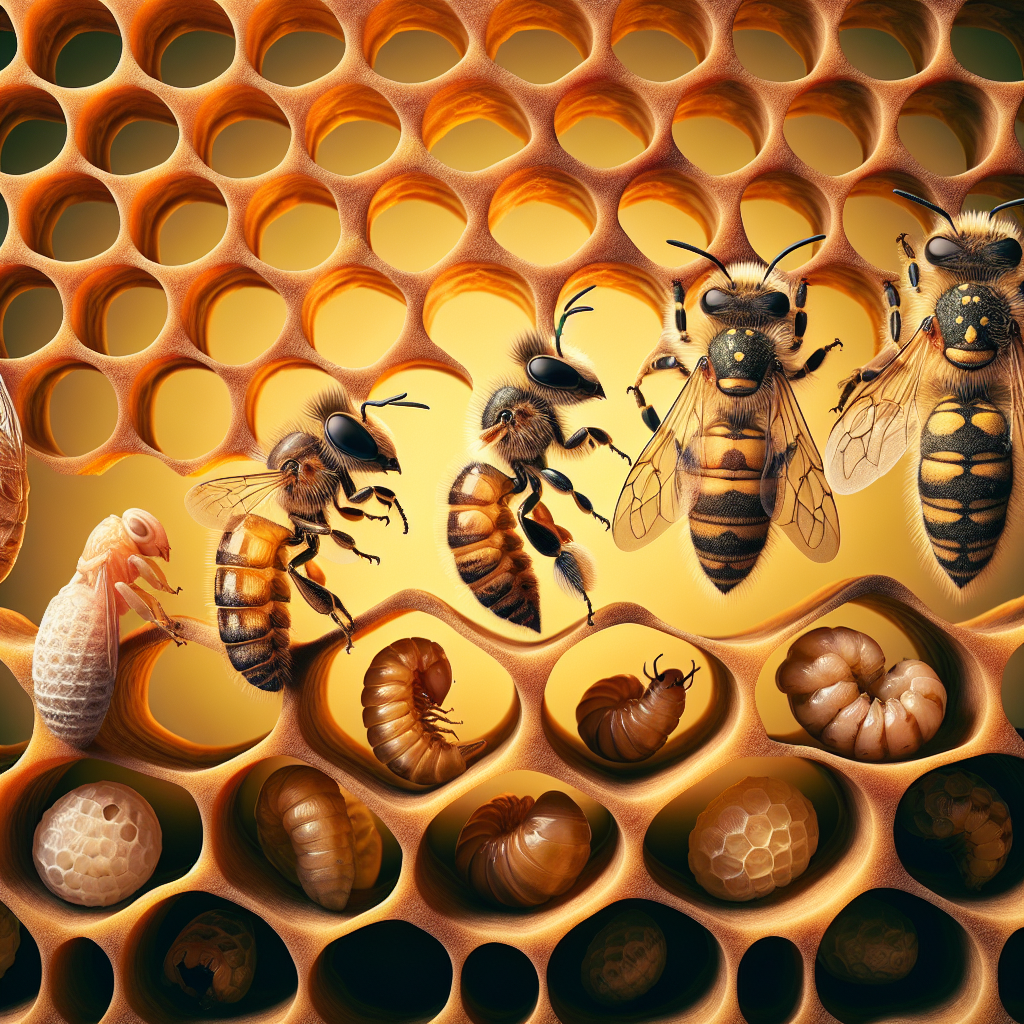
Bees, like all insects, undergo a complete metamorphosis in their life cycle. This process includes four stages: egg, larva, pupa, and adult. The queen bee lays the eggs, which are tiny, white, and cylindrical. After three days, the eggs hatch into larvae. These larvae are fed by worker bees and grow rapidly, shedding their skin five times. After about a week, the larvae spin a cocoon around themselves and become pupae. Inside the cocoon, the pupae undergo a dramatic transformation and emerge as adult bees. Understanding the life cycle of bees can help us appreciate the complexity of their world and the important role they play in our ecosystem.
Understanding the Life Cycle of a Bee is part of our ongoing coverage of bees. We focus on practical guidance, clear examples, and realistic trade-offs so readers can make better decisions.
Understanding the Life Cycle of a Bee is part of our ongoing coverage of bees. We focus on practical guidance, clear examples, and realistic trade-offs so readers can make better decisions.
Understanding the Life Cycle of a Bee is part of our ongoing coverage of bees. We focus on practical guidance, clear examples, and realistic trade-offs so readers can make better decisions.